
When wandering around my suburb I’ve noticed a few hearty Agave plants in my neighbours’ garden growing strong. How did this desert plant become such an Aussie garden favourite?
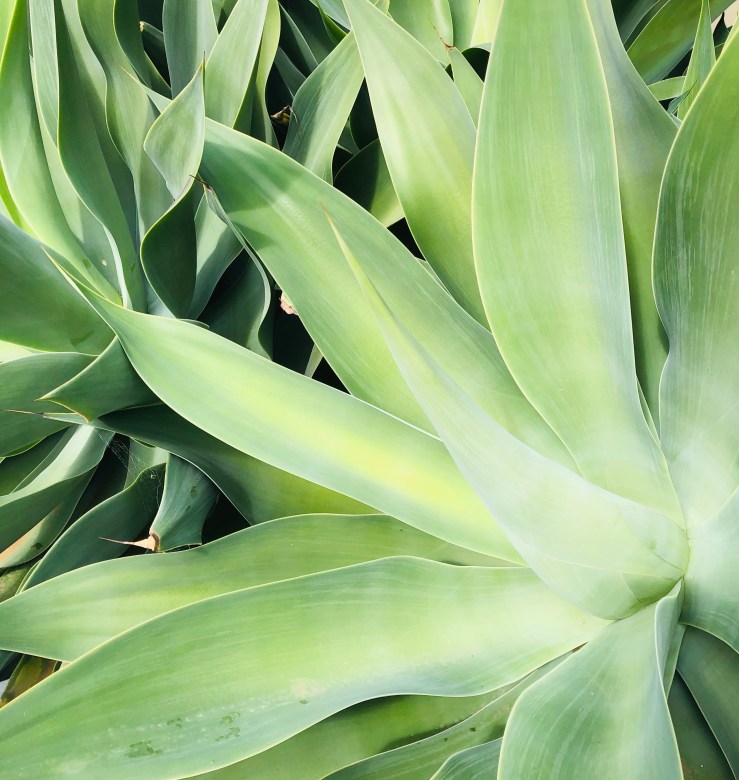
With over 200 species, the incredibly versatile Agave plant has been historically uprooted from its place of original seeding of the regions of South, Central, North America to migrate into domestic gardens all over the world.
But how did this hardy and hard-working plant that has many cultural and economic uses in its home country become a decorative and “invasive” plant in the Australian landscape?
Agave’s cultural legacy
A canna plant, succulent that is very much like cacti, the agave plant is a tough and versatile plant that flourishes in semi-arid areas.
With the ability to withstand high temperatures and poor growing conditions, the agave needs very little water – surviving and thriving in very tough conditions.
A plant worthy of respect, the wonderous agave can be traced back through the centuries and is considered as a symbol of long life and health, dancing and fertility in some cultures.
(The agave is personified as the Aztec goddess, Mayheul, and is revered by the Nahuatl, the original inhabitants of western Mexico.)
‘The Agave Cultural Landscape of Mexico is not celebrated for objects or architecture, but instead for the relationship between the people of the region and the natural environment,’ states the UNESCO (United Nations Educational, Scientific and Cultural Organisation) World Heritage Convention.
Utilised to make bio-fuels, sweeteners, and fiber for clothing, brushes, spoons, nets, fans, rope, and paper, agave is also a well-known ingredient in the production of blue tequila.
According to the Arizona Daily Independent, ‘Aztecs, Anasazi, Hohokam, and the Tohono O’odham have used the agave for fiber, food, medicine, adult beverages, and building materials for thousands of years.’
So how did agave come to Australia?
History suggests that Spanish colonisation of the region meant that agave was also used by the Spanish conquistadors to make tequila, and exported the plant from its regional home. History often repeats, and it’s worth noting that last year the first Australian agave distillery was created.
It’s believed agave was introduced to Australia by the invading British colonisers, and early European settlers as a decorative hedge.
Left to grow freely for far too long, agave is threatening the bio-diversity of the natural Australian landscape. Agave is now considered an “invasive plant” by Victoria’s Invasive Plant and Animals Policy Framework.
Nurturing the agave
Officially these green beauties can grow up to one-metre high, although I’m tempted to get out a measuring tape on some of my neighbour’s plants as some look taller than this.
The Agave plant has green rosettes which are rigid – a clever plant, these rosettes catch and keep the rain. The Agave plant can grow in varying conditions, but loves a sunny spot with well-drained soil. Agave can also make for beautiful indoor plants.
A hardwearing plant, The Agave is high-impact with low maintenance. It’s beauty and potential height means this plant is an obvious choice for a gardener looking to make use of outdoor space.
Far from home, but beloved in many domestic gardens, agave plants are an excellent addition. Ensure agave are contained and kept in fenced off areas, and if you see any of these beauties in the natural landscape let your local Parks statutory authority know.

 Andrea Simpson