Agave’s many uses

When wandering around my suburb I’ve noticed a few hearty Agave plants in my neighbours’ garden growing strong. How did this desert plant become such an Aussie garden favourite?
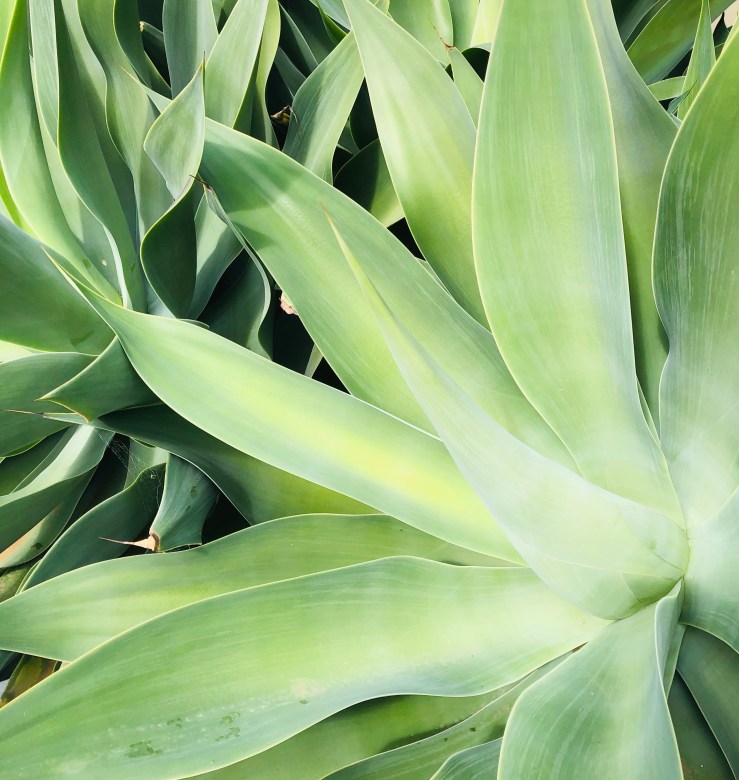
Agave from my yard.

With over 200 species, the incredibly versatile Agave plant has been historically uprooted from its place of original seeding of the regions of South, Central, North America to migrate into domestic gardens all over the world.

But how did this hardy and hard-working plant that has many cultural and economic uses in its home country become a decorative and “invasive” plant in the Australian landscape?

Agave’s cultural legacy

A canna plant, succulent that is very much like cacti, the agave plant is a tough and versatile plant that flourishes in semi-arid areas.

With the ability to withstand high temperatures and poor growing conditions, the agave needs very little water – surviving and thriving in very tough conditions.

A plant worthy of respect, the wonderous agave can be traced back through the centuries and is considered as a symbol of long life and health, dancing and fertility in some cultures.

(The agave is personified as the Aztec goddess, Mayheul, and is revered by the Nahuatl, the original inhabitants of western Mexico.)

‘The Agave Cultural Landscape of Mexico is not celebrated for objects or architecture, but instead for the relationship between the people of the region and the natural environment,’ states the UNESCO (United Nations Educational, Scientific and Cultural Organisation) World Heritage Convention.

Utilised to make bio-fuels, sweeteners, and fiber for clothing, brushes, spoons, nets, fans, rope, and paper, agave is also a well-known ingredient in the production of blue tequila.

According to the Arizona Daily Independent, ‘Aztecs, Anasazi, Hohokam, and the Tohono O’odham have used the agave for fiber, food, medicine, adult beverages, and building materials for thousands of years.’

So how did agave come to Australia?

History suggests that Spanish colonisation of the region meant that agave was also used by the Spanish conquistadors to make tequila, and exported the plant from its regional home. History often repeats, and it’s worth noting that last year the first Australian agave distillery was created.

It’s believed agave was introduced to Australia by the invading British colonisers, and early European settlers as a decorative hedge.

Left to grow freely for far too long, agave is threatening the bio-diversity of the natural Australian landscape. Agave is now considered an “invasive plant” by Victoria’s Invasive Plant and Animals Policy Framework.

Nurturing the agave

Officially these green beauties can grow up to one-metre high, although I’m tempted to get out a measuring tape on some of my neighbour’s plants as some look taller than this.

The Agave plant has green rosettes which are rigid – a clever plant, these rosettes catch and keep the rain. The Agave plant can grow in varying conditions, but loves a sunny spot with well-drained soil. Agave can also make for beautiful indoor plants.

A hardwearing plant, The Agave is high-impact with low maintenance. It’s beauty and potential height means this plant is an obvious choice for a gardener looking to make use of outdoor space.

Far from home, but beloved in many domestic gardens, agave plants are an excellent addition. Ensure agave are contained and kept in fenced off areas, and if you see any of these beauties in the natural landscape let your local Parks statutory authority know.


It’s a privilege, a poem

A poem published By ManicWorld Magazine (May 2025), It’s a privilege was my rumination on life in Australia as a woman. I never take for granted how lucky we are here. The privilege we hold in this country is like no other.

But still in a patriarchal system there will always be much to navigate and I cannot ignore how our First Nations people are treated, as I believe this land was never ceded.

So this poem is both a reflection of my love for Australia but also my misgivings.

Thank you ManicWorld Magazine for platforming this poet, and please enjoy my poem. Much love.

Some poetry

My poem ‘Sad Girl Day’ was published in 2021 by FemAsiaMagazine, and written in direct reaction to the Melbourne lockdowns during the COVID-19 pandemic. I had two young children locked in with me, and I was working as an arts journalist reporting on the impacts of the lockdowns on the industry. Every day I woke up feeling so helpless, and that life was something to endure.

Screenshot

I ended up experiencing some major life hurdles, which in turn eroded my mental health. I thought, maybe I needed to stop writing all together. Maybe the writing was part of the problem. So I quit writing in 2023. Memory and time felt translucent. I was writing, I was just hiding it from myself. I don’t even remember writing this poem, titled ‘Poems: poem’ found in my notes app.

So back here, back to now. And it seems I can’t let writing go. So writing with intention it is.

Personal Profile: Mitch Tripney

A recent severe motor cross accident has changed Mitch Tripney’s life dramatically, but his outlook remains as positive as ever.

Mitch Tripney in 2019 on his favourite motor cross bike. Photo supplied.

LIFE CAN CHANGE UNEXPECTEDLY

If you have ever met Mitch Tripney you would know his extremely positive outlook on life is rare. But even more so after surviving a traumatic life-changing event in the form of an acute motor cross accident in February 2023.

The start of his year looked much different to where he is now. Placing him in a different set of wheels, Mitch has lost the mobility of his legs and spine, and now uses a wheelchair “but not for too much longer,” he hopes.

A beloved father, partner, friend, brother and son, Mitch credits his life’s focus to his loving partner Alysha Kendall, and his (not so) newborn nearly 10-month-old son Ryott. “I don’t know where I’d be if I didn’t have Alysha or Ryott in my life. ”

Humble to the core Mitch describes his previous motor cross riding as ‘more of a hobby than a profession career.’

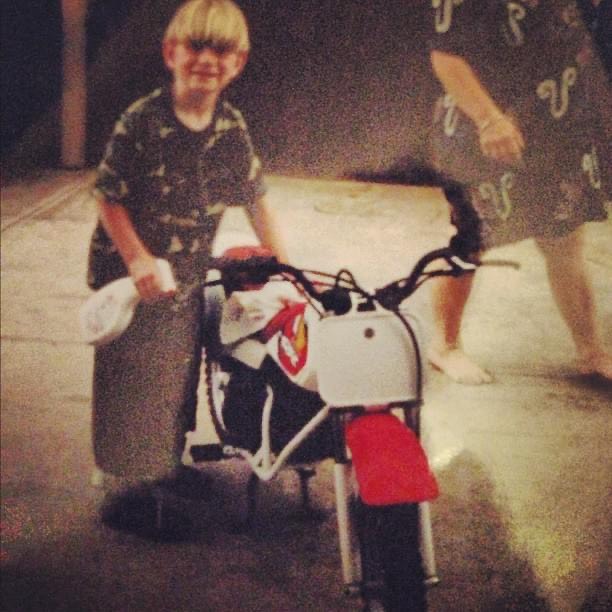
Mitch took to motor cross riding like a duck to water. Here he cleans his bike. Photo supplied.

Although he recounts it as a “Career/Hobby”, Mitch has actually been riding motor cross bikes since the young age of six, and often travelled interstate to wow audiences with his dare devil skills.

More of an extreme stunt rider than entering into competitions, Mitch’s previous career highlights were Rodeo Shows in Darwin. He was also part of the South Australian Freestyle Motor Cross Championship.

“I rode motor cross, and free style motor cross and I was able to go and travel interstate doing freestyle shows and make some money through my riding here and there… I competed but mainly what I preferred to do was ride the demonstrations,” says Mitch.

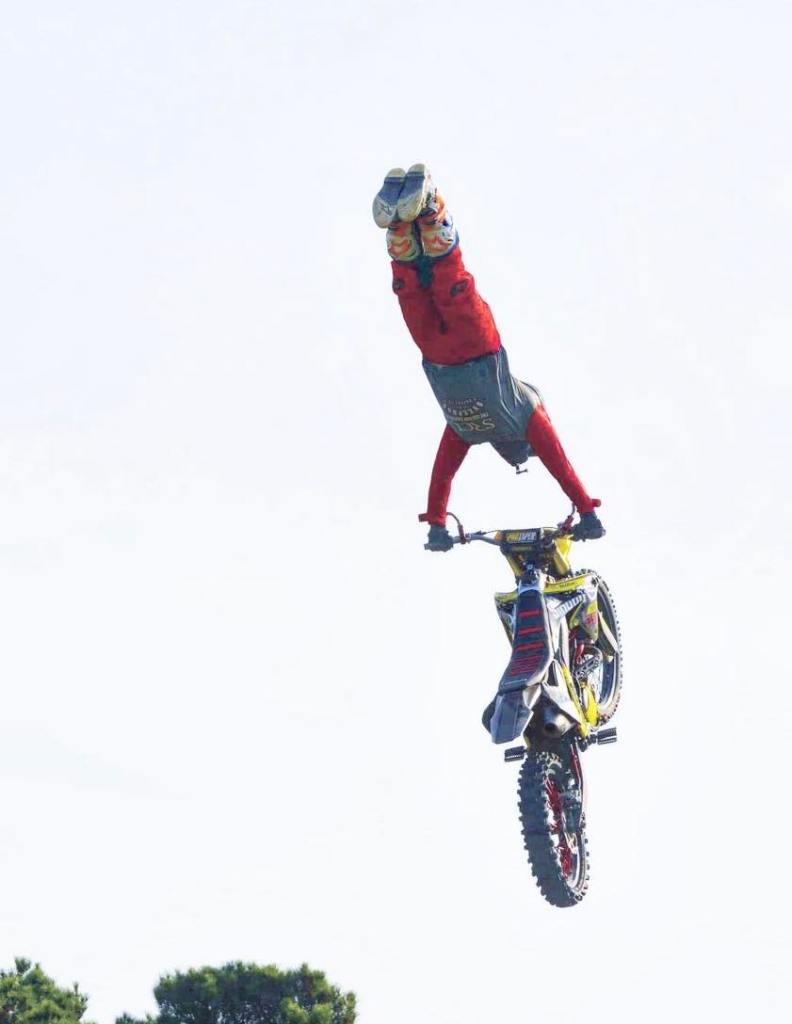
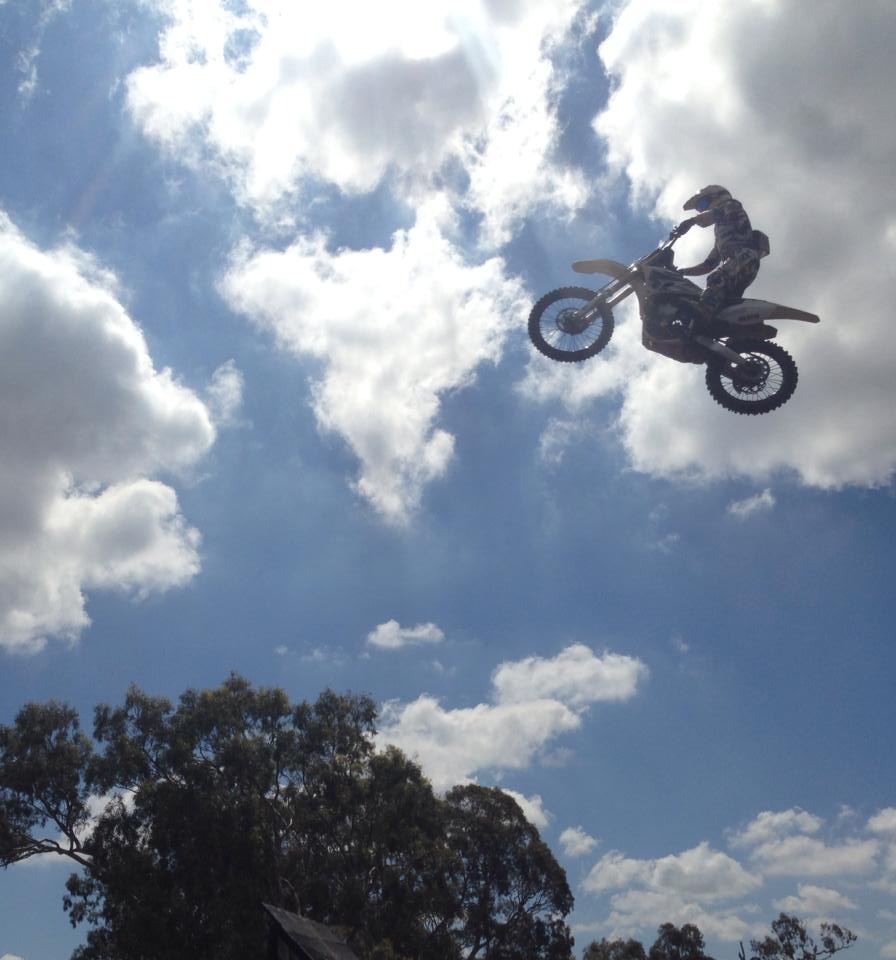
“With extreme demonstrations, we would have ramps set up to either a dirt landing ramp, or a portable landing ramp. We would just jump from one end to the other in the air and try and make some form of acrobatic movement with the bikes,” He says.

Mitch performs a difficult motor cross stunt.

A DAY HE WILL NEVER FORGET

Knowing fully that motor cross is a dangerous sport, Mitch has always prided himself on taking optimal safety measures, and knowing what his body and bike are capable of on the day.

Putting his body on the line, Mitch is not new to nursing some broken bones or two. He explains, “I actually had a bone scan the other day and the doctor had asked me to list some injuries.

“I said alright I’ll start at my skull: I’ve had skull fractures, I’ve had a broken neck, broken back, and lots of broken ribs, broken shoulder, both arms broken multiple times, left tibia multiple times,” and the list goes on.

Before he met his partner Alysha, Mitch confesses he was an adrenalin junkie and a risk taker on his bike. However, looking back on the fateful day, Mitch felt like it was a perfect storm of events, from his bike choice to the angle he took on the jump.

He refuses to attribute the accident to any one thing in particular, but felt in his gut that the day didn’t feel quite right. “I got an opportunity to ride a freestyle show, and I wanted to be the cool dad, and try and ride in front of my son and so I took that opportunity.”

Mitch and his son Ryott take a ride in his new wheels. Photo supplied.

RECOVERY IS ABOUT HAVING A POSITIVE MINDSET

Mitch credits his remarkable recovery on Alysha’s dedication, “Prior to meeting Alysha I was pretty depressed and just kind of buried it,” he says. The love for his son Ryott fuels him to regain the mobility of his legs.

Without his family’s unwavering support he would not have the motivation he has to recover. The major accident caused Mitch to have “a burst fracture to my L1 Vertebra, and I shattered my sacrum – which I believe is the back of your pelvis and coccyx bone and inside my body I had a bunch of haematomas,” He describes.

Surprising his doctors and care team on the speed of his rehabilitation, specialists have said, “that I would potentially never walking ever again.” Such words pushed Mitch to set new health goals.

“The doctors knew I was in a bad way because I got helicoptered from Echuca to the Royal Melbourne Hospital straight away. And I was conscious the whole time.  ”

Mitch performs another amazing stunt.

The future is what you make it, and Mitch’s future looks bright. With the support of his family, friends, and the love of his life Alysha and son Ryott nothing is impossible for Mitch.

“I feel like I had a choice when I was in the helicopter – I was literally having out of body experiences and watching myself with Alysha holding my hand. I thought you don’t have to be in this pain if you don’t want to. But I chose to ‘go to the left’ and push through,” Mitch continues.

“I told myself you have to do this for your family. And don’t back out and whatever comes from it you have to accept it. You have to own it, and you have to kick its ass.”

To learn more about Mitch Tripney’s Journey head over to Mitch’s Facebook Page, Instagram Page and his business Instagram Page Sircle Official.

If I can grow mint, so can you

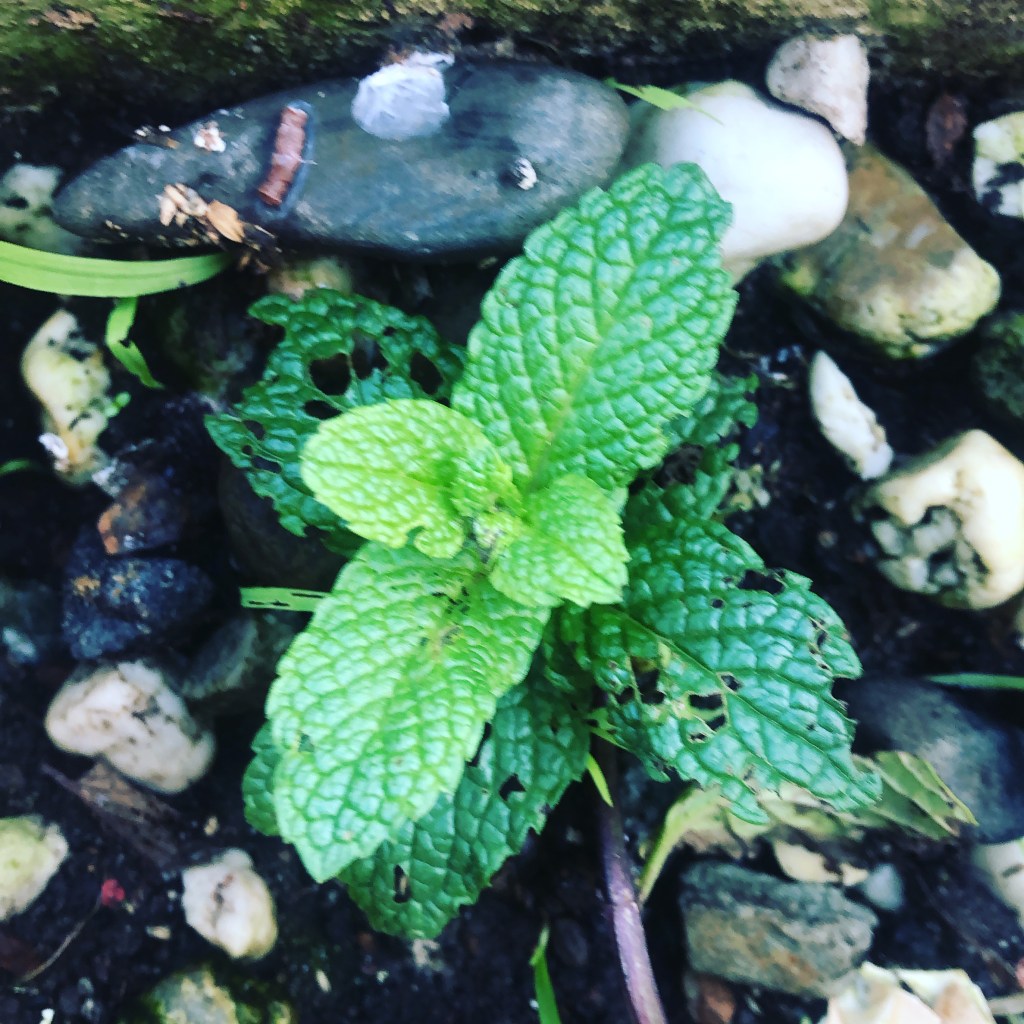
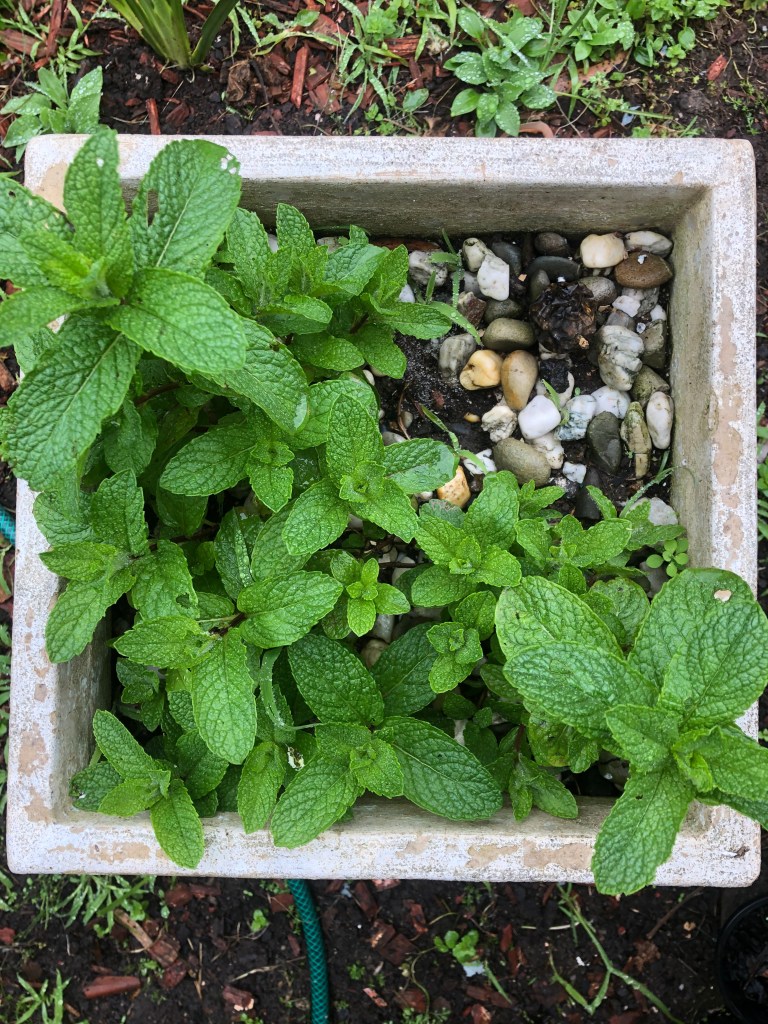
My baby mint in winter.

A boost to your tea, and an added bonus to gut health – mint is a must in the garden. 

Growing mint has been a joy. You know why? It’s just so easy. 

As a novice gardener (I literally stumbled on gardening because there were weeds in my way) I’ve found caring for different types of plants challenging. 

Different plants have different needs. Some need more sun, others are fine in shade and shelter. However, mint will just kick on without too much encouragement, and you can plant it anywhere. Keep an eye out for this one, as left alone, it can choke out other plants and herbs.

I chose to plant my mint in a box situated in the garden where the morning sun will greet it. The lush green, and fresh aroma has made my mint a proud addition to the garden.

My mint in spring.

Mint is great fresh at hand. It contains all the goodies of fibre, vitamin A, iron, and more. Mint has proven medical benefits for indigestion, and IBS. And it’s also great for the eyes and the brain. Good job mint! 

Mint is also easy to identify, all you need to do is to smell the leaves and the scent will trigger your memory.  For me, it instantly conjures up thoughts of herbal tea, and ice cream.

Mint is everywhere, and it’s a herb that’s all about positive giving. So give mint a go.