
An avid gardener has been gifting fresh flower cuttings to her community, boosting morale and wellbeing during the coronavirus pandemic.
People’s mental health and wellbeing has suffered during the Coronavirus pandemic. The Australian Medical Association (AMA) has stated a likely ‘increase in demand for specialist mental health services,’ during this time.
With an increase of people working from home, and isolating in their communities, loneliness and disconnection are only a few factors that could lead to a decline in mental health.
However, Wanda Steudle, a thoughtful resident of the Diggers Rest community, located in Melbourne’s north-western suburbs, is finding new ways to elevate her community’s emotional wellbeing, and to keep people connected.
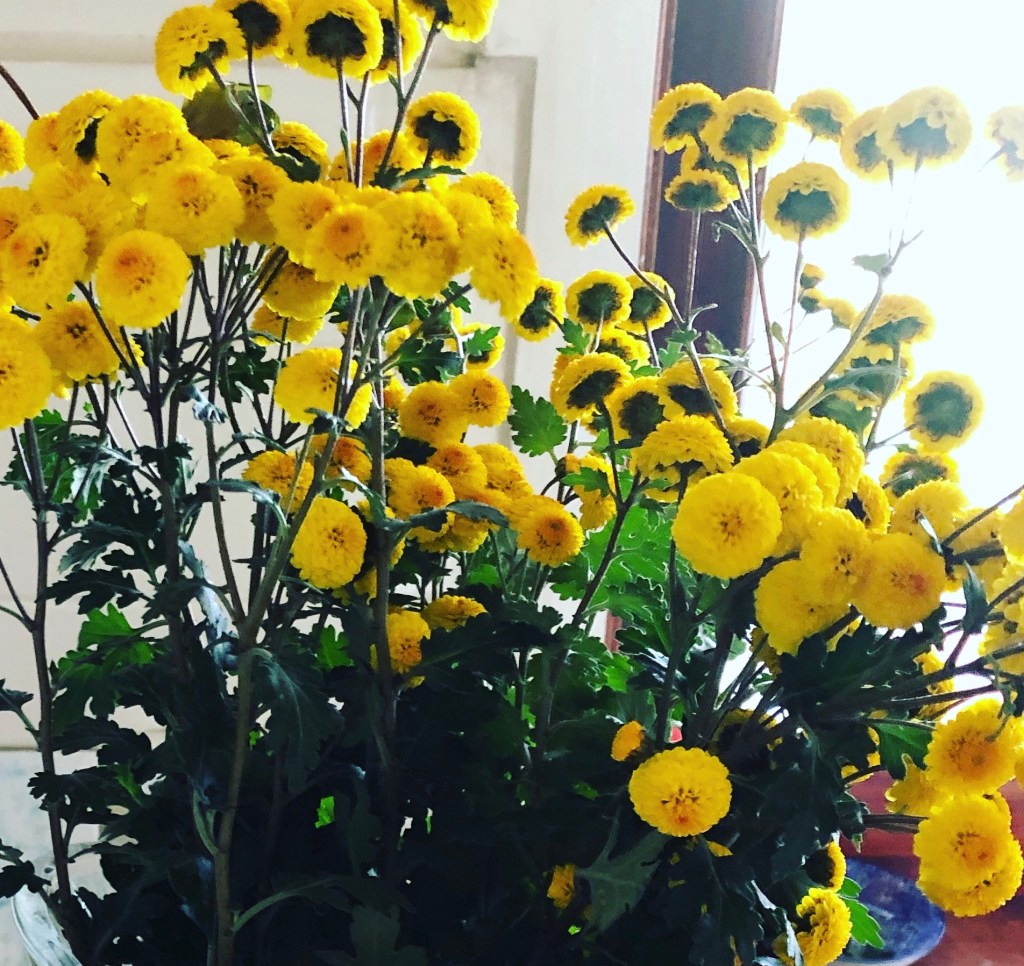
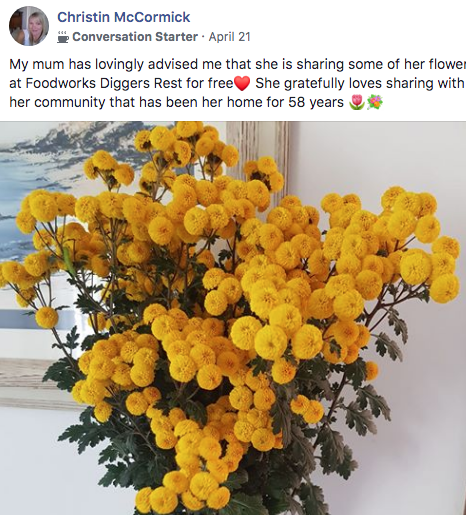
With a generous heart, Wanda has been leaving fresh flower cuttings of chrysanthemums from her garden at the local Foodworks for people to take home for free. Known as “Wonder Woman,” by her daughter Christin, Wanda’s kind gesture was welcomed by her neighbours during the pandemic.
‘Mum said: “I’d love to share my love of flowers – so I’m just going to leave them there”,’ Christin said.
Utilising different methods to stay “apart, but together,” Christin suggested posting on the local community Facebook page to let locals know they were welcome to take the fresh flowers.
The local Diggers Rest Community Facebook page is a treasure trove of helpful neighbourly advice, and great garden tips. Grateful neighbours who picked up Wanda’s flowers thanked her for her kindness.
‘This is such a beautiful gesture,’ one neighbour commented.
‘I saw your mum working on the garden outside Foodworks. Her love shines through her work, Chris. Thank you Wanda,’ another neighbour posted.
FLOWERS ELEVATE EMOTIONAL WELLBEING
Research has shown that exposure to plants, gardening and green space has positive impacts on mental and physical health.
‘Gardens and landscapes have long been designed as sanctuaries and retreats from the stresses of life,’ Lecturer in Urban Horticulture, University of Melbourne, Chris Williams stated. “Therapeutic horticulture” and “horticultural therapy” have become recognised treatments for stress and depression, which have served as a healing aid in settings ranging from prisons and mental health treatment facilities to schools and hospitals.’
Over the 58 years Wanda and her husband Siggy have been residents of this thriving community, Wanda had been previously gifting cuttings of her garden at the Foodworks to celebrate other occasions such as Mother’s Day.
Not only does Wanda volunteer to tend the garden at the front of the shops, but she has also cared for many of her neighbours’ gardens.
‘She has been maintaining that garden for a few years now. She actually knocked on Foodworks’ door and asked whether she could maintain it. She wanted to give back to the community, and that is her way of doing that,’ Christin said.
‘She has also made these incredible beautiful friends. She would have to have close to over 100 gardens in the community she has helped with,’ she said. ‘That’s how the community relationships have developed.’
With restrictions implemented in Victoria to slow down the spread of Covid-19, people have been engaging with their communities more than ever. And caring for the community’s environment is foremost on resident’s minds.
Mental health service, Beyond Blue’s Gardening Forum: Does anyone else like gardening? is growing in members by the day. A “brains trust” of enthusiastic green thumbs, this forum promotes positive mental health through sharing of gardening tips.
In May of this year, Beyond Blue announced an increase in funding with a $48.1 million commitment from the Commonwealth.
Beyond Blue CEO Georgie Harman said, ‘This pandemic is affecting those who live with mental health issues, and those who have never struggled before, and the National Mental Health and Wellbeing Pandemic Response Plan highlights the need for rapid access to services and supports for people experiencing varying levels of distress.’
Cultivating and incentivising community activities such as gardening groups, and creating more communal green spaces could increase community participation, and boost community morale.
Early in May, Wanda’s husband Siggy had a cardiac arrest.
‘Dad collapsed in front of mum,’ Christin said. ‘Mum went straight to a neighbour, and within three minutes our neighbour started CPR.’ Quick-thinking community members, one being a nurse, helped Siggy until the ambulance arrived.
‘It’s again another incredible story about how this community, and even in these times, still are able to pull together – and band together. And now dad is fully recovered.’
Cultivating community links by sharing the joys of green space will have positive impacts for people within the community.
‘I think that’s what they love about this place is because it’s so community-based. And I’ve seen it – I’ve grown up in it as well. It has gotten bigger but the community spirit is alive,’ Christin concluded.

 Andrea Simpson
What an inspiring story about an inspiring person! These people are heroes in their own way!
LikeLike